


Poly-SM Center (NERC 2021)
The PolySM Lab is managed by Prof. Jason Bara (Poly-SM co-director, ChBE Professor) and Dr. Pravin Shinde (Lab Manager, Research Scientist). This lab’s equipment and characterization facilities are available to internal and external users, either directly or via the utilization of trained research staff. User fees apply, depending on equipment use (research staff time, expendables, etc.). Email Dr. Pravin Shinde (psshinde@ua.edu) to be added to the Outlook Calendar to view the availability and schedule the facilities. Booking can be made no more than a week in advance. Testing in the Poly-SM lab will generally be available during standard UA operating hours (8:00 am – 5:00 pm). The available facilities and the charges are listed below.
*A technician is required for GPC, DSC, TGA, BET, FTIR microscope, IC and DMA testing. However, testing permission can potentially be granted for one student per instrument from a UA research group, if training is first completed ($100) and approved by the Poly-SM lab manager. ** Please coordinate with the Lab Manager before visiting the Poly-SM lab for a tour, as the instruments may be in use.
** A $10 cancellation fee will be charged on instrument reservations that are cancelled with less than 24 hours notice.
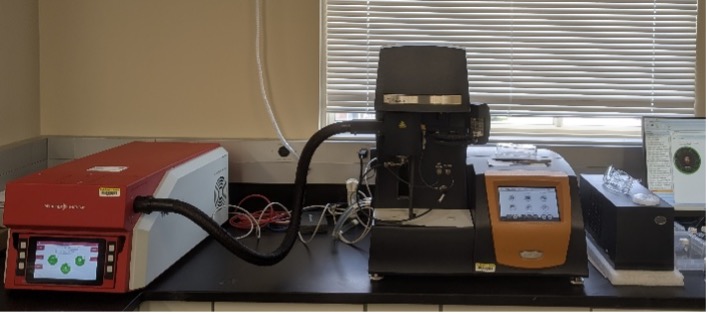
Thermogravimetry Analysis coupled with mass spectroscopy
TGA 5500-MS
- UA Internal Rate: $15/h for TGA only and $25/h for TGA-MS (with user’s pan)
- UA Trained Rate: N/A*
- Non-UA Academic Rate: $35/h
- Commercial Rate: $80/h
- Notes: Group can use crucibles from PolySM ($10/ceramic crucible) or use their own based on POLY-SM requirements.
- Status: Up and running!
Equipment Details
Model: TGA 5500-MS
Instrument Info
- Discovery TGA 5500 (TA Instruments) with Mass Spectroscopy (Pfeiffer)
- Temp range: RT to 1000 °C
- Carrier gas: UHP Nitrogen
- Autosampler capability
- Make: TA Instruments, New Castle, Delaware, USA
Sample Requirement
- Hanging pans/crucibles: Platinum with stirrup + ceramic cylindrical crucibles
- Material required: 10-20 mg
What to expect: Thermal stability, Thermal decomposition behavior with quantification of gaseous byproducts/ intermediates.

Differential Scanning Calorimetry
DSC 250
- UA Internal Rate: $7 (pan+lid) + $35/sample
- UA Trained Rate: $7 (pan+lid) + $30/sample
- Non-UA Academic Rate: $7 (pan+lid) + $35/sample
- Commercial Rate: $7 (pan+lid) + $60/sample
- Notes: Need to show sample stability based on prior TGA data unless it is a known material. Groups that supply their lids/pans are not subject to the $7 consumable cost. Don’t turn off the N2 purge gas until chiller comes to a room temperature.
- Status: Up and running!
Equipment Details
Model: DSC 250
Instrument Info
- DSC250 system equipped with RCS120 (upgraded from RCS40)
- Temp range: -120 °C to 400 °C
- Carrier gas: UHP Nitrogen
- Autosampler capability
- Make: TA Instruments, New Castle, Delaware, USA
Sample Requirement
- Pans: Tzero Al
- Lids w/ or w/o pinholes: Tzero Al, Tzero Al Hermetic, and Tzero Al Alodined Hermetic
- Material required: 10-20 mg
What to expect: Phase transition, Glass transition temperature (Tg), Melting point (Tm), Crystallization temperature (Tc), Specific Heat Capacity (Cp)
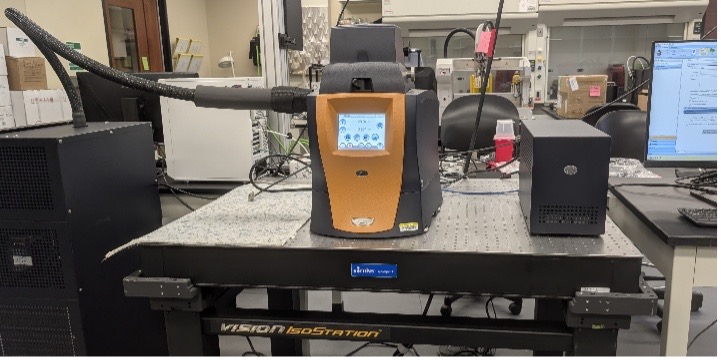
Dynamic Mechanical Analysis
DMA 850
- UA Internal Rate: $6/h (reservable in either 4 or 8 hour blocks)
- UA Trained Rate: N/A*
- Non-UA Academic Rate: $45/h
- Commercial Rate: $120/h
- Notes: Chiller must be turned off if not in use. Don’t turn off purge gas until chiller comes to a room temperature.
- Status: Up and running!
Equipment Details
Model: DMA 850
Instrument Info
- Force range: 0.0001 to 18 N
- Frequency range: 0.01 to 200 Hz
- Standard furnace: -160 to 600°C (standard furnace)
- Humidity accessory: 5 to 120°C Humidity range: 5 to 95%
- Make: TA Instruments, New Castle, Delaware, USA
Sample Requirement
- Sample requirement depending on clamp size (typically between 10-50 mm in length, 5-20 mm in width, and with a thickness ranging from 1-5 mm)
What to expect: Physical properties (i.e. testing of creep or cold flow, stress relaxation, cure behavior). Composition (i.e. degree of cross-linking, crystallinity levels, effect of filler). Viscoelastic properties (i.e. storage modulus, loss modulus, Tan δ, glass transition Tg)
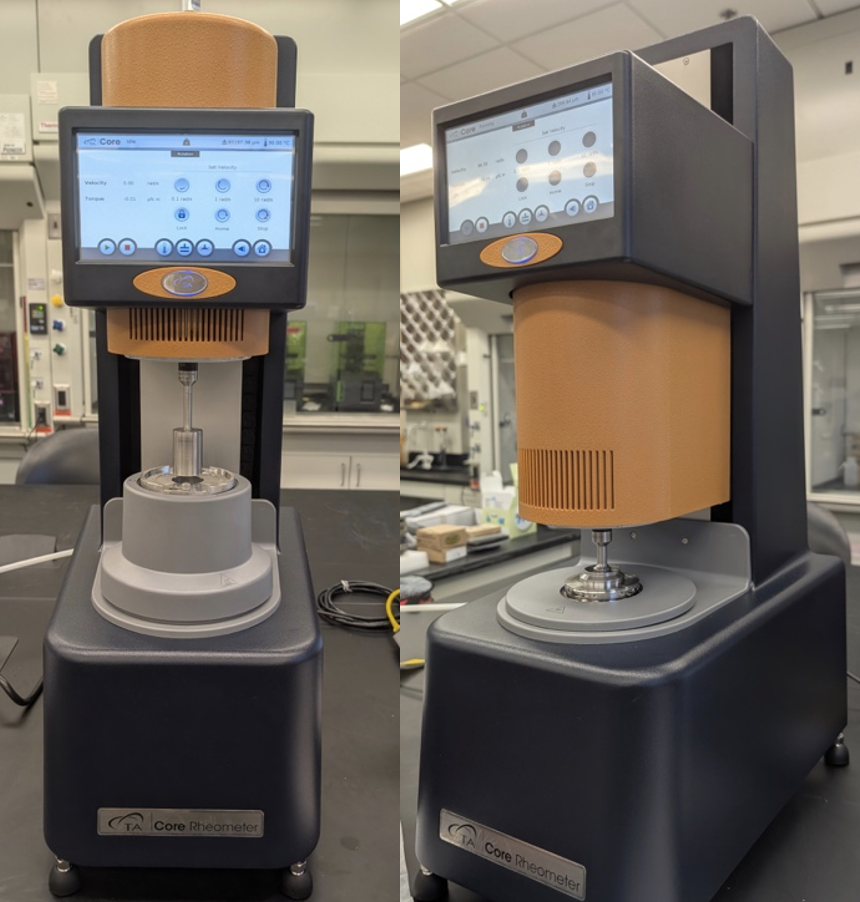
Discovery Core Rheometer
- UA Internal Rate: $20/h
- UA Trained Rate: $15/h
- Non-UA Academic Rate: $45/h
- Commercial Rate: $70/h
- Notes: Don’t forget to turn off the in-house compressed air valve once the experiments are done.
- Status: Up and running!
Equipment Details
Model: N/A
Instrument Info
- Peltier plate and concentric cylinder geometry, Built-in air-cooling
- Captures the entire viscosity profile across controlled shear rates and oscillatory modes
- Rapid and error-free test turnaround
- Torque range: 0.1 μN·m (Steady Shear), 0.3 μN·m (Oscillation) to 124 mN·m
- Max Rotational Velocity: 300 rad/s
- Angular Frequency range: 0.0001 to 628 rad/s
- Automatic gap control with 0.1 μm gap positioning resolution
- Temperature Range: -10 to 200 °C (Plate), 0 to 150 °C (Cylinder)
- Make: TA Instruments, New Castle, Delaware, USA
Sample Requirement
- Sample requirement: liquid, semi-liquid, gel
- Sample volume <2 mL (Peltier plate geometry), ideal for creams, gels, dispersions, and emulsions.
- Sample volume ~ 7-8 mL (concentric cylinder geometry) for low-viscosity samples (as low as 1 cP)
- Plates and samples should be cleaned using IPA and dried.
What to expect:
Test modes:
1) Flow (Steady Shear)- Evaluate viscosity behavior across shear rates;
2) Oscillation- Assess viscoelastic properties like storage modulus, loss modulus, tan δ, structure stability; and
3) Transient tests- Measures yield stress, thixotropy, creep, recovery, and structural rebuild behavior.
Useful in Formulation science; Food & beverage rheology; Paints, inks, and coatings; Cosmetic and personal care products; Polymers and resins; Pharmaceuticals; Slurries, cement, and construction materials, etc.
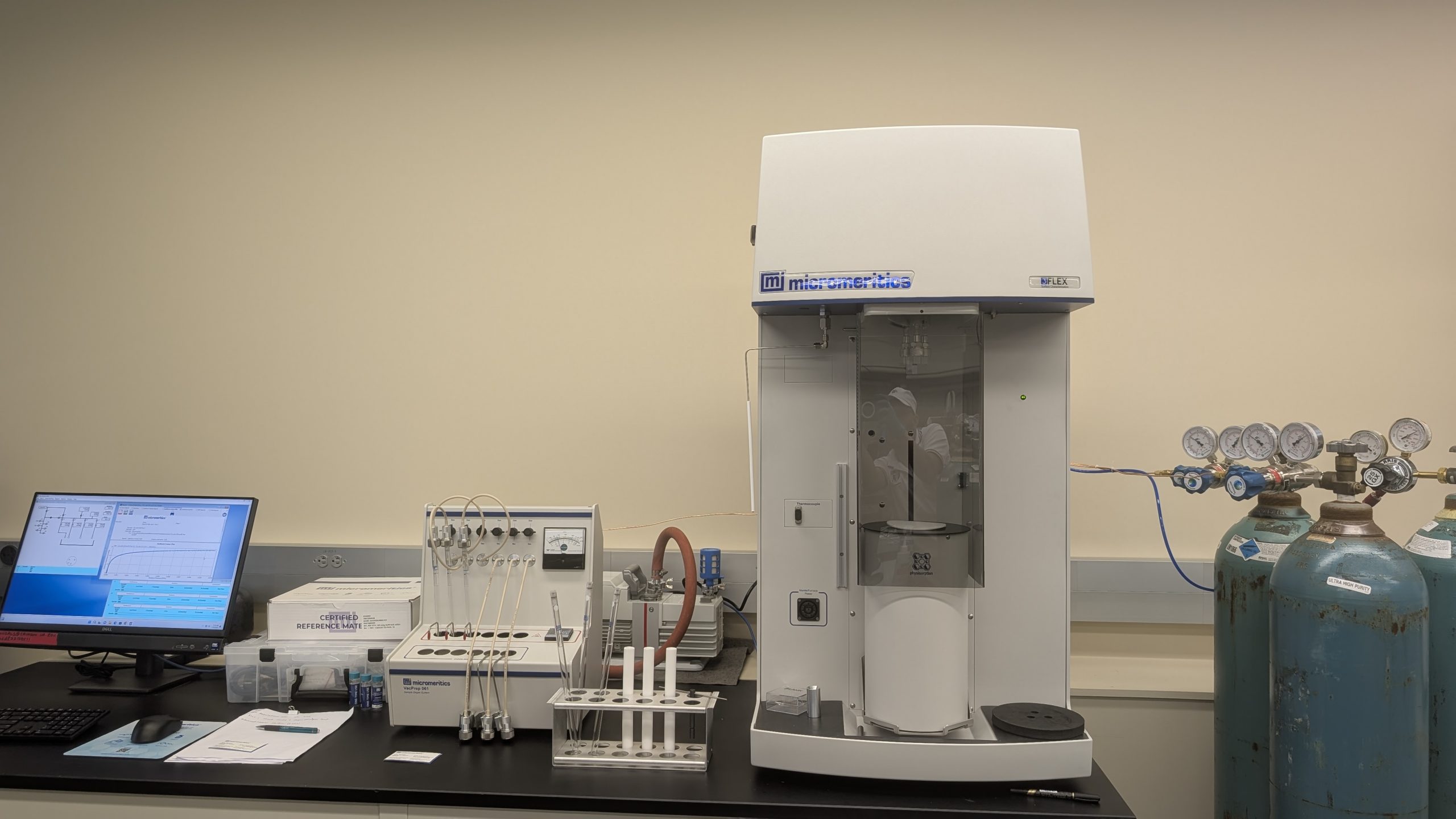
Multiport Surface Characterization Analyzer
MSCA
- UA Internal Rate: $35/sample
- UA Trained Rate: $30/sample
- Non-UA Academic Rate: $40/sample
- Commercial Rate: $60/sample
- Notes: Info about sample, degas conditions (temperature and time), analysis conditions (pressure points, gas dosing (optional)) need to be provided.
- Status: Up and running!
Equipment Details
Model: MSCA
Instrument Info
- 3-ports (3 samples) simultaneous data collection
- Carrier Gas (s): Air, Helium, Nitrogen
- Measurement: Chemisorption and Physisorption
- Minimum measurable surface area: 0.01 m2/g (Physisorption)
- Micro/meso/macro pore size: 0.1 nm to 3 µm.
- Make: Micromeritics, Malvern Panalytical, Malvern, UK
Sample Requirement
- Dry solid samples in the form of Powder (preferred) or granular beads
- Liquid Nitrogen (LN2) is required
- Sample amount: 0.1-0.5 g
- Currently supports only Physisorption (Analysis range: 1.3 x 10⁻⁹ to 1.0 P/P0)
What to expect: BET surface area, Relative surface area (Langmuir), pore size and volume distribution. Suited for analyses of MOFS, zeolites, activated carbons, adsorbents, and a wide variety of porous and non-porous materials.
Isothermal Titration Calorimetry
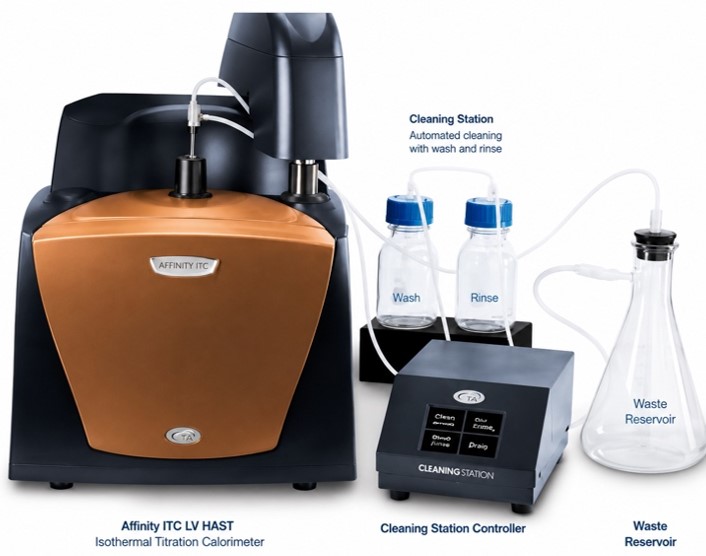
Affinity ITC
- UA Internal Rate: $25/sample
- UA Trained Rate: $20/sample
- Non-UA Academic Rate: $30/sample
- Commercial Rate: $75/sample
- Notes: The ITC cell and injection syringe should be cleaned before and after the experiment using 2% Conrad solution.
- Status: Located in SEC 3458. Up and running!
Equipment Details
Model: Affinity ITC
Instrument Info
- Fully automated, user-selectable system cleaning routines eliminate run-to-run contamination
- Equipped with automatic cleaning station for fast reaction cell cleaning
- FlexSpin™ provides innovative slow-speed stirring (0-200 rpm), efficient mixing and highest sensitivity
- Low volume reaction cell (190 µl)
- Temperature control (2-80 °C)
- Injection syringe volume up to 250 µl
- Minimum injection volume 0.01 µl
- Minimum detectable heat limit of 0.05 µJ
- Maximum measurable heat/event: ~5000 µJ/injection
- Analysis software: ITCRun + NanoAnalyzer
- Make: TA Instruments, New Castle, Delaware, USA
Sample Requirement
- Analyte (titrand): Appropriate concentration of analyte in buffer (water or organic solvent) in ITC cell
- Appropriate concentration of ligand (titrant) in a similar buffer (water or organic solvent) in the injection syringe
- The pH of buffer should be > 4
What to expect: Measure very strong binding interactions between molecules, utilizing a “Low Volume” sample cell and advanced features like “HAST”. Helps determine the thermodynamic parameters such binding affinity-equilibrium dissociation constant (KD) and association constant (KA), Enthalpy change (ΔH), Entropy change (ΔS), free energy (ΔG), and stoichiometry (n).
Mechanical Testing (UTM)
- UA Internal Rate: $20/h
- UA Trained Rate: $15/h
- Non-UA Academic Rate: $30/h
- Commercial Rate: $60/h
- Notes: Use appropriate grips based on tests.
- Status: Up and running!
Equipment Details
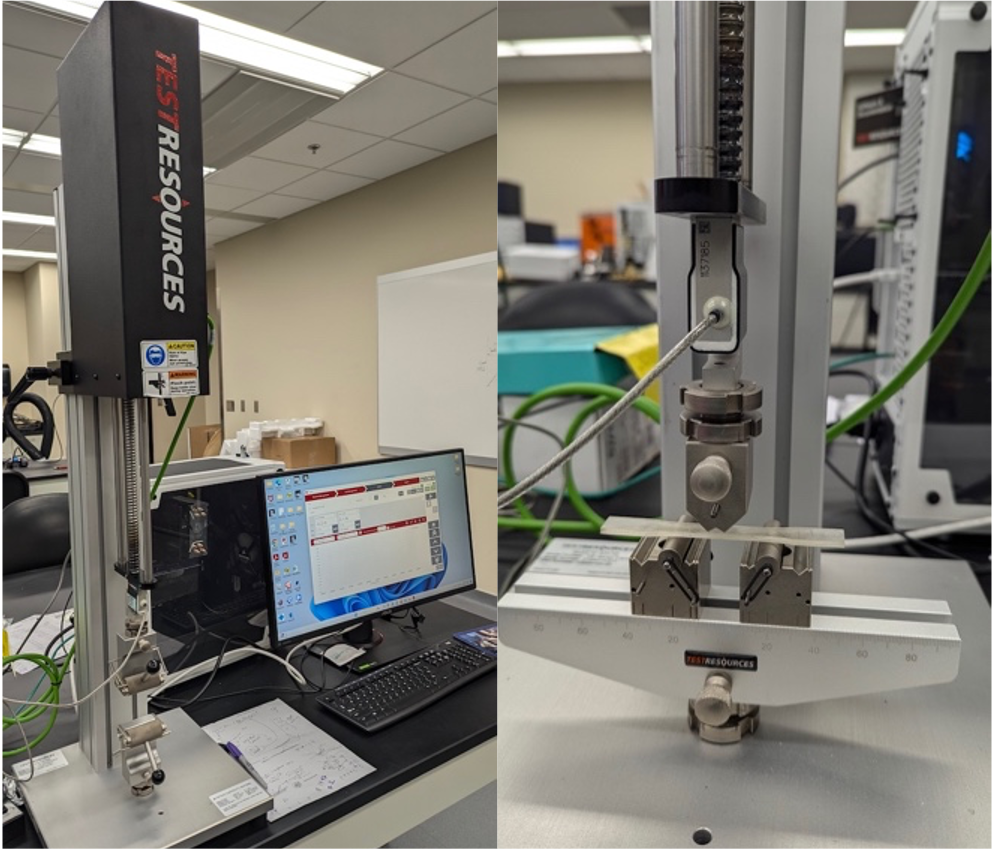
Model: 100 Family Electromechanical UTM
Instrument Info
- Universal Testing Machine (UTM) from Test Resources Inc.
- Single-column load-frame UTM with a 1.1 kN load cell capacity and a speed range of 0.01 to 30 in/min
- Stroke length of 12 in and a load measurement accuracy of ± 1.0% of reading down to 1/100th of load cell capacity.
- Make: Shakopee, MN, USA
Sample Requirement
- Bollard-type grip (Model G1103) for tensile test
- Three-point flexural bending tool
- Compression discs
- Sample sizes/shapes in standard ASTM format or custom-made as required
What to expect: Elongation/tensile and compression stress-strain curves, Tensile strength, Elastic Young’s modulus, Flexural stress
Mechanical Testing (APEX1)
- UA Internal Rate: $25/h
- UA Trained Rate: $20/h
- Non-UA Academic Rate: $40/h
- Commercial Rate: $80/h
- Notes: Currently, only tensile and torsional tests are possible.
- Status: Up and running!
Equipment Details
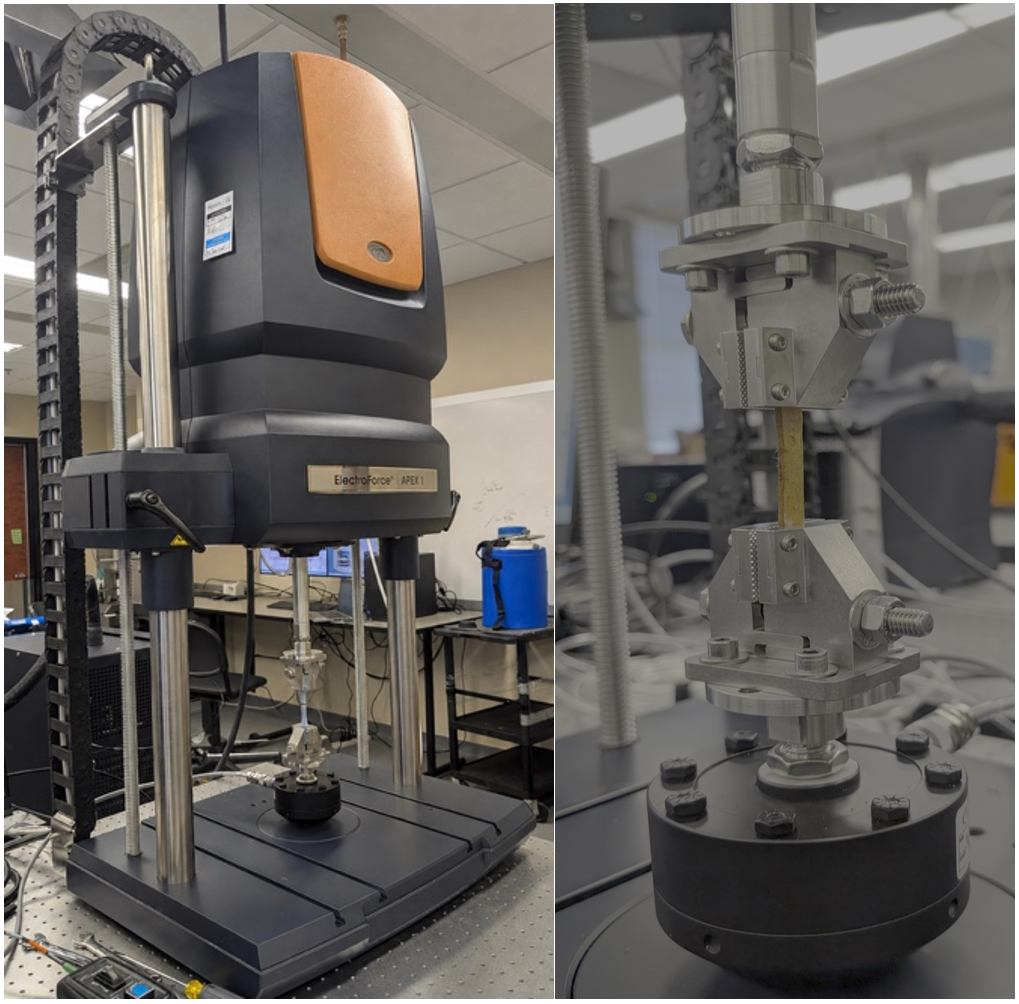
Model: ElectroForce APEX 1
Instrument Info
- A table-top axial electrodynamic mechanical-testing instrument from TA Instruments
- Uses a friction-free ElectroForce linear motor, allowing both slow monotonic deformation and high-frequency cyclic loading on the same platform
- Single-column load-frame UTM with a 1.1 kN load cell capacity and a speed range of 0.01 to 30 in/min
- Stroke length of 12 in and a load measurement accuracy of ± 1.0% of reading down to 1/100th of load cell
- Maximum dynamic axial force:±1 kN
- Continuous static/RMS axial force: ±710 N
- Motor stroke / dynamic displacement: 100 mm
- Linear velocity: 0.05 µm/s to 2.5 m/s
- Fatigue-frequency range: 0.00001–100 Hz
- Displacement-sensor resolution: 1 nm, exceeding the displacement accuracy of ASTM E2309 Class
- Optional torsional rotation: 62 revolutions, multi-turn
- Optional dynamic torque: ±14 N·m and Optional continuous torque: ±14 N·m
- Make: TA Instruments, New Castle, Delaware, USA
Sample Requirement
- Serrated-jaw wedge grip for Tensile test (available at the moment)
- Sample sizes/shapes in standard ASTM format or custom-made as required
- Other grips for compression/flexural tests can be purchased as needed.
What to expect: Monotonic mechanical testing (Elongation/tensile and compression stress-strain curves). Fatigue and durability, Creep, recovery and stress relaxation, and Fracture testing
FTIR Microscope (LUMOS II)
- UA Internal Rate: $30/h
- UA Trained Rate: $20/h
- Non-UA Academic Rate: $50/h
- Commercial Rate: $120/h
- Notes: Users can bring their own Liquid nitrogen (LN2) or buy it from PolySM.
- Status: Will be available soon (Starting from Oct 1st)!
Equipment Details
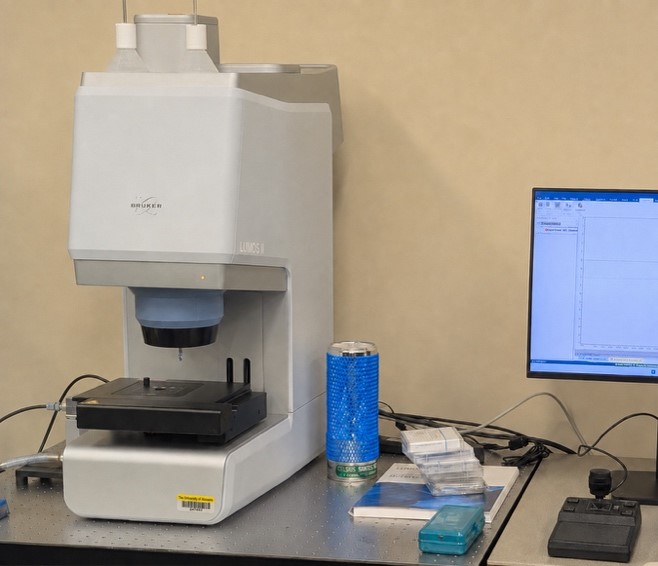
Model: LUMOS II Bruker Optics
Instrument Info
- LUMOS II is a high-performance fully automated stand-alone Fourier-transform infrared (FT-IR) microscope used to study materials and visualize their chemical distribution at the micrometer scale by identifying their molecular bonds and functional groups.
- Measurement modes: Transmission, reflection, and attenuated total reflection (ATR) microscopy
- Spectral coverage: Full mid-infrared range for FTIR microscopy and FPA imaging (4000-650 cm-1)
- Detector: Thermoelectrically cooled TE-MCT detector, Liquid-nitrogen-cooled MCT detector, Focal-plane array (FPA) imaging detector (32 × 32-pixel), collects up to 1,024 spatially resolved spectra simultaneously
- FPA imaging speed: Up to 1.6 mm²/s
- Spatial resolution: Up to 10 µm in reflection and transmission mode, up to 1.25 µm in ATR mode
- Maximum sample height/thickness: up to 40 mm
- Make: Billerica, Massachusetts, USA
Sample requirement varies based on modes
- ATR: Flat and non-moving, Thick, opaque, dark, highly absorbing, or irregular materials. e.g. Unknown bulk sample, particle, coating defect, fiber, tablet, adhesive, or opaque material when contact is acceptable
- Transmission: Flat, thin, and free of folds IR-transparent samples (5–20 µm) e.g. Thin films, microtomed polymer sections, isolated particles, tissue sections, or samples deposited on IR-transparent windows
- Reflection: Flat, smooth, and reflective. e.g. Coatings on metal, polished surfaces, electronics, reflective films, or samples that cannot be contacted by the ATR crystal
What to expect: It finds applications in polymer and plastic identification; Multilayer films, laminates, and coatings; Failure and root-cause analysis; Contamination and foreign-particle identification; Pharmaceutical tablet composition and component distribution; Fibers, paints, adhesives, and packaging; Microplastics and environmental particles; Semiconductor and electronics defects; Biological tissue and thin-section imaging; Oxidation, curing, degradation, and chemical-aging studies
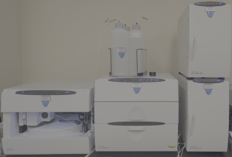
Ion Chromatography (ICS 6000)
- UA Internal Rate: $20/sample
- UA Trained Rate: $15/sample
- Non-UA Academic Rate: $30/sample
- Commercial Rate: $60/sample
- Notes: Users can bring their own vials/syringe filters or buy those from PolySM.
- Status: Up and running!
Equipment Details
Model: Dionex™ ICS-6000 HPIC system
Instrument Info
- Dionex ICS-6000 is a dual-channel modular high-performance ion chromatography (HPIC) system that is used to separate, identify, and quantitatively measure ionic species in liquid samples.
- Pump pressure: Up to 5000 psi (Operates at 2000 psi at 1mL/min)
- Anion exchange column: IonPac AS18, 4 x 250 mm; Uses about ~23 mM KOH eluent, 1 mL/min flow rate, and 30 °C temperature, Separates: Fluoride, acetate, formate, chlorite, chloride, nitrite, carbonate, bromide, sulfate, nitrate, chlorate, and phosphate anions
- Cation exchange column: IonPac CS12A, 4 x 250 mm; Uses about ~20 mM Methanesulfonic acid (MSA) eluent, 1 mL/min flow rate, and ~30 °C temperature, Separates: lithium, sodium, ammonium, potassium, magnesium, and calcium cations.
- Automation: Autosampler and automated sequences using Chromeleon CDS
- Quantification: Calibration standards needed for each ion
- Make: Thermo Fisher Scientific, Waltham, Massachusetts, USA
Sample Requirement
- High purity deionized (DI) water (³ 18.2 MΩ·cm resistivity) for making standards, blanks, dilution, and rinsing purposes
- Calibration standard solutions of desired cations and/or anions need to be prepared if not available
- 10-mL PolyVials with compatible septum and caps (Thermo Scientific)
- 0.2–0.45 µm, IC-compatible syringe filters
What to expect: The system determines the identity and concentration of ions. It is helpful in determining ions selectivity, salt concentrations, ionic impurities, extraction efficiency, separation efficiency, and changes in aqueous-phase composition before and after a process.
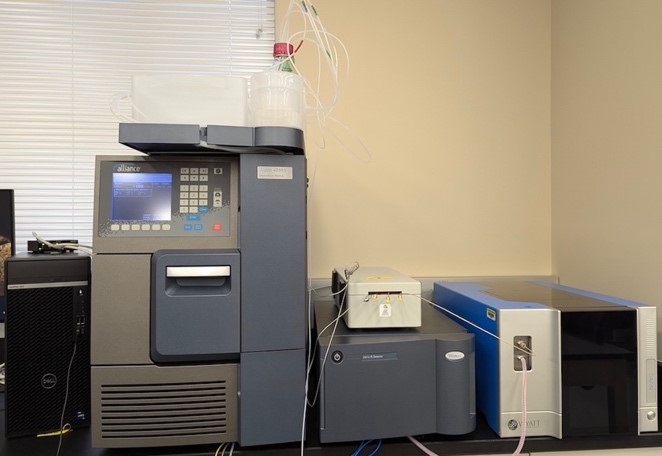
Gel Permeation Chromatography (GPC) with refractive index (RI) and multiangle light scattering (MALS) detectors
Waters GPC-RI-MALS
- UA Internal Rate: $50/h
- UA Trained Rate: N/A*
- Non-UA Academic Rate: $75/h
- Commercial Rate: $120/h
- Notes: Users should pay for the consumable (vials/syringe/PTFE filters).
- Status: Up and running!
Equipment Details
Solvent: HPLC-grade THF
Model: —-
Instrument Info
- Waters Alliance e2695 separation module with 2414 RI Detector
- Temperature: 40 °C, Flow: 1mL/min
- Injection volume: 20-100 uL
- Column: Styragel HR 5E, mixed bed, 5 µm x 7.8 mm X 300 mm in THF
- Mw range: 2K – 4M Da
- Wyatt Multi-Angle Light Scattering (MALS) Dawn (W3) attachment
- Temperature: RT,
- MW range: 200 Da to 1 GDa, Molecular size range: 10-500 nm]
- Make: Waters Corporation, Milford, MA, USA
Sample Requirement
- 2 mL-capacity GPC vials with septum caps from Waters
- 0.45 and 0.20 um PTFE syringe filters
- 2-5 mL sterile syringes and needles
- HPLC grade THF
- Sample amount in THF: 1-5 mg/mL (Typically, 1 mg/ml))
What to expect: Number average molecular weight (Mn in kDa), Weight average molecular weight (Mw in in kDa), and Polydispersity index (PDI).
Absolute molecular weight, size distribution, and hydrodynamic radius. Specific refractive index increment (dn/dc) of polymers.

Gel Permeation Chromatography (GPC) Tosoh GPC-RI (w/ RI Detector)
- UA Internal Rate: $40/h
- UA Trained Rate: N/A*
- Non-UA Academic Rate: $60/h
- Commercial Rate: $85/h
- Notes: N/A
- Status: Will be upgraded and running soon!
Equipment Details
Solvent: HPLC-grade THF
Instrument Info
- EcoSEC Elite® GPC autosampler System equipped with refractive index (RI) detector
- Columns: Two in series TSKgel Alpha-M GPC Column- 7.8 mm x 30 cm x 13 um
- Temperature: 40 °C, Flow: 0.5mL/min
- Make: TOSOH BIOSCIENCE, Tokyo, Japan
Sample Requirement
- 2 mL-capacity GPC vials with septum caps
- 0.45 and 0.20 um PTFE syringe filters
- 2-5 mL-capacity sterile syringes and needles
- HPLC-grade THF (tetrahydrofuran)
- Sample amount in THF: 1 mg/mL
What to expect: Number average molecular weight (Mn in kDa), Weight average molecular weight (Mw in in kDa), and Polydispersity index (PDI)

SLA 3D Printers
- UA Internal Rate: N/A
- UA Trained Rate: N/A*
- Non-UA Academic Rate: N/A
- Commercial Rate: N/A
- Notes: Users can buy their resins.
- Status: Up and running!
Equipment Details
Instrument Info
- ELEGOO Mars, ELEGOO Mars 2P, ELEGOO Saturn
- Make: Elegoo, Guangdong, China
Sample Requirement
- Resins: Abs-like, Acrylic-based, PVC-incorporated, etc.
What to expect: Design and 3D-print objects with smooth and precise detail

FDM 3D Printers
- UA Internal Rate: 0 – 4 hrs: free; 4 – 10 hrs: $10; 10+ hrs: $1/hr
- Notes: Users can buy their resins.
- Status: Up and running!
Equipment Details
Instrument Info
- QiDi 3D plus
- Make: QiDi Tech, Zhejiang, China
Sample Requirement
- Filaments: PLA, ABS, Nylon, etc.
What to expect: Design and 3D-print light-weight objects.

Extrusion-based 3D printer
Starter Series
- UA Internal Rate: N/A
- UA Trained Rate: N/A*
- Non-UA Academic Rate: N/A
- Commercial Rate: N/A
- Notes: N/A
- Status: Up and running!
Equipment Details
Model: Starter series
Instrument Info
- 3D Bioplotter Starter Series, Capable of extruding and 3D-printing several materials (liquids, melts, pastes, gels, or other materials, including cells) at low and high temperatures (250 °C max).
Sample Requirement
- Raw material (Polymers, Silicones, composites, ionic liquids, fillers, etc.)
What to expect: Extrusion of fibers and 3D-printing of objects.

Gas Permeability Analyzer
2100-X
- UA Internal Rate: N/A
- UA Trained Rate: N/A*
- Non-UA Academic Rate: N/A
- Commercial Rate: N/A
- Notes: N/A
- Status: Up and running!
Equipment Details
Model: 2100-X
Instrument Info
- Upper Bound Permeation Analyzer (Maxwell-1044 system)
- Make: Maxwell Robotics, USA
Sample Requirement
- Polymer membranes
What to expect: Pure gas permeability, Selectivity.

Polarized Optical Microscope (POM)
- UA Internal Rate: –
- UA Trained Rate: –
- Non-UA Academic Rate: –
- Commercial Rate: –
- Notes: Please clean the microscope area before and after the use.
- Status: Up and running! (Contact for training and charges)
Equipment Details
Model: Leica DM 2700P
Instrument Info
- It’s a research-grade polarized-light imaging system for examining crystals, polymers, fibers, minerals, films, and other optically anisotropic materials.
- Make: Deerfield, IL, USA
Sample Requirement
- Camera upgraded to Leica Model K3C
What to expect: It reveals orientation, crystallinity, internal stress, phase structure, and optical anisotropy that may be invisible under ordinary brightfield illumination.
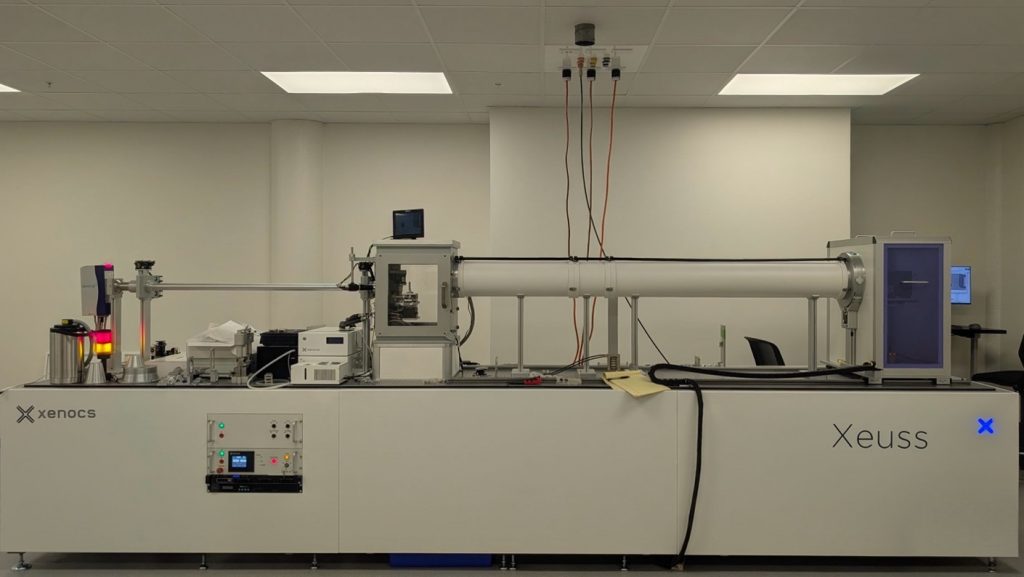
SAXS/WAXS Instrument
- UA Internal Rate: N/A*
- UA Trained Rate: N/A*
- Non-UA Academic Rate: N/A*
- Commercial Rate: N/A*
- Notes: N/A*
- Status: Located in BEV 2061. Coming Soon!
Equipment Details
Model: Xeuss HR, 2010
Instrument Info
- N/A*
What to expect: N/A*